Asiatic Wild Dog (Dhole)
24 Jan 2026
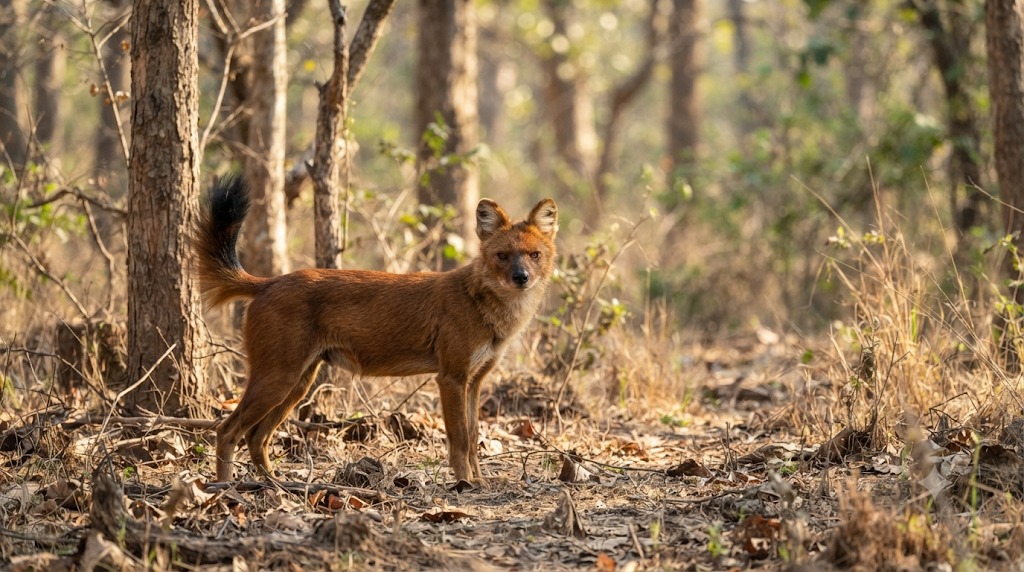
Consider the following statements regarding the ecological niche and diet of the Asiatic Wild Dog: They primarily target medium-to-large ungulates such as chital and sambar. They cannot coexist with large apex predators like tigers and leopards due to identical hunting niches. Which of the statements given above is/are correct?
- 1 only
- 2 only
- Both 1 and 2
- Neither 1 nor 2
Practice questions are answered inside your account. Create a free account, or see what practice includes.
The recent sighting of an Asiatic Wild Dog (Dhole) via camera traps in a tiger reserve is considered a positive ecological indicator primarily because:
- It proves that the reserve has successfully eradicated all leopards and tigers
- It indicates a healthy prey base, high habitat quality, and minimal human disturbance
- It shows that the species has adapted to urban fringe landscapes
- It confirms the complete absence of interspecific competition in the area
Practice questions are answered inside your account. Create a free account, or see what practice includes.
Which of the following best describes the social structure and hunting behavior of the Asiatic Wild Dog (Dhole)?
- Solitary ambush predators that hunt exclusively at night
- Nomadic scavengers that rarely hunt live prey
- Cooperative pack-hunting canids that rely on teamwork and coordinated strategies
- Territorial monogamous pairs that defend small woodland patches
Practice questions are answered inside your account. Create a free account, or see what practice includes.
In India, the primary distribution strongholds of the Asiatic Wild Dog (Dhole) include which of the following regions?
- Indo-Gangetic plains and Thar desert
- Central Indian highlands, Western Ghats, and Eastern Ghats
- Sundarbans delta and Salt Flats of Kutch
- Trans-Himalayan cold deserts and Brahmaputra valley
Practice questions are answered inside your account. Create a free account, or see what practice includes.