Thiksey Monastery
22 Aug 2026
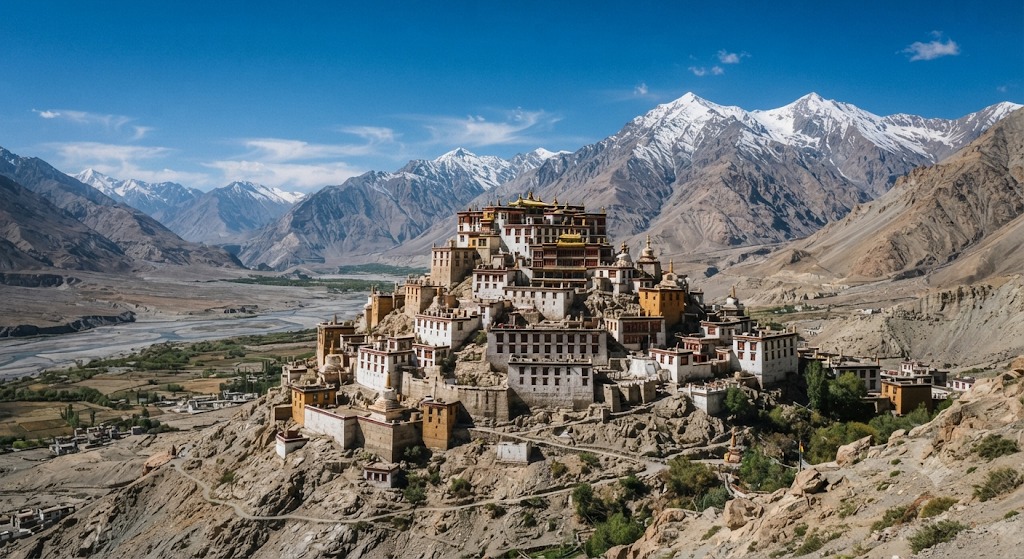
Consider the following statements regarding the Thiksey Monastery: It belongs to the Gelugpa or Yellow Hat tradition of Tibetan Buddhism. It is situated on the left bank of the Indus River Valley. It was founded in the 15th century under the guidance of a disciple of Je Tsongkhapa. Which of the statements given above are correct?
- 1 and 2 only
- 1 and 3 only
- 2 and 3 only
- 1, 2 and 3
Practice questions are answered inside your account. Create a free account, or see what practice includes.
Which of the following monastic establishments in Ladakh is frequently referred to as the 'Mini Potala of Ladakh' due to its structural resemblance to the Potala Palace in Lhasa?
- Hemis Monastery
- Thiksey Monastery
- Diskit Monastery
- Lamayuru Monastery
Practice questions are answered inside your account. Create a free account, or see what practice includes.
Consider the following features associated with the Thiksey Monastery: A 15-metre-high statue of the Maitreya Buddha consecrated by the 14th Dalai Lama. The Tara Temple containing representations of the 21 forms of Goddess Tara. Annual celebration of the Gustor festival featuring masked ritual dances known as Cham. How many of the above features are correctly associated with Thiksey Monastery?
- Only one
- Only two
- All three
- None
Practice questions are answered inside your account. Create a free account, or see what practice includes.
In the context of the cultural celebrations at Thiksey Monastery, the term 'Torma' refers to what?
- A traditional Tibetan wind instrument used during morning prayers
- Symbolic sacrificial figures that are ritually dismantled during the Gustor festival
- Masked ritual dances portraying the triumph of righteousness over wickedness
- White-painted monastic residences located at the lower levels of the monastery
Practice questions are answered inside your account. Create a free account, or see what practice includes.