Dust EXperiment (DEX)
9 Jan 2026
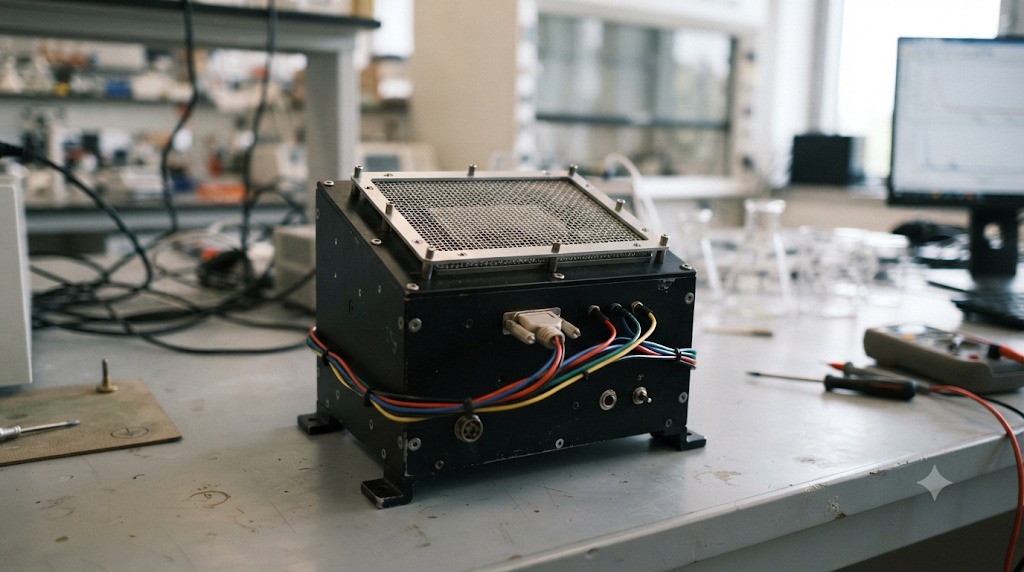
Consider the following statements regarding the Dust EXperiment (DEX): It is India's first domestically built cosmic dust detector developed jointly by ISRO and the Physical Research Laboratory (PRL). It was carried as a payload on the PSLV Orbital Experimental Module (POEM) during the PSLV-C58 XPoSat mission. Which of the statements given above is/are correct?
- 1 only
- 2 only
- Both 1 and 2
- Neither 1 nor 2
Practice questions are answered inside your account. Create a free account, or see what practice includes.
What is the primary function of the Dust EXperiment (DEX) payload operating in low-Earth orbit?
- To measure solar radiation and coronal mass ejections affecting telecommunication satellites
- To identify and quantify fast-moving interplanetary and orbital dust particles striking Earth's upper atmosphere
- To monitor space debris originating exclusively from defunct geostationary communication satellites
- To track near-Earth asteroids capable of crossing Earth's orbit
Practice questions are answered inside your account. Create a free account, or see what practice includes.
Consider the following features of the Dust EXperiment (DEX): It operates on a hypervelocity principle capable of identifying impacts moving faster than 4 km/s. It features a narrow field of view of less than 45° to focus exclusively on polar orbits. Which of the statements given above is/are correct?
- 1 only
- 2 only
- Both 1 and 2
- Neither 1 nor 2
Practice questions are answered inside your account. Create a free account, or see what practice includes.
Based on measurements from the Dust EXperiment (DEX), approximately how frequently does an interplanetary dust particle (IDP) enter Earth’s atmosphere?
- Every 1 minute
- Every 16 minutes
- Every 2 hours
- Every 24 hours
Practice questions are answered inside your account. Create a free account, or see what practice includes.
Interplanetary Dust Particles (IDPs) that contribute to the formation of meteor layers originate from which of the following sources?
- Cometary debris, asteroidal collisions, and cosmic erosion
- Volcanic eruptions on Earth and atmospheric turbulence
- Industrial pollutants and space launch vehicle exhaust plumes
- Solar wind condensation within the Earth's magnetosphere
Practice questions are answered inside your account. Create a free account, or see what practice includes.