The Nuclear Heat-Based Cu–Cl Hydrogen Facility
27 Jun 2026
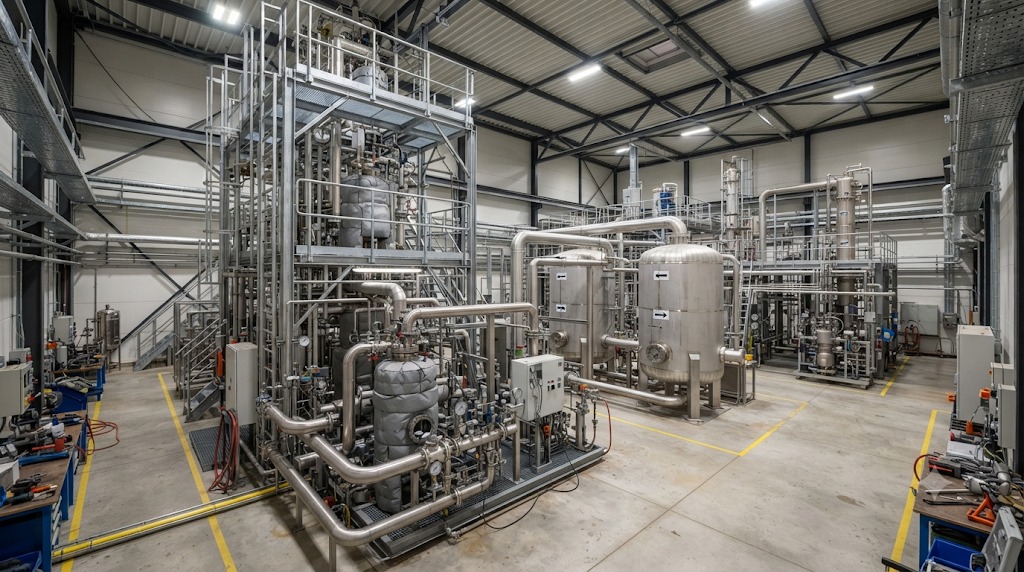
With reference to the Copper–Chlorine (Cu–Cl) thermochemical water-splitting cycle used at the Kalpakkam facility, consider the following characteristics: It requires a maximum operating temperature of around 530°C, which is significantly lower than that required by the Sulfur–Iodine cycle. The electrochemical stage of the cycle operates at a voltage higher than standard water electrolysis. Which of the statements given above is/are correct?
- 1 only
- 2 only
- Both 1 and 2
- Neither 1 nor 2
Practice questions are answered inside your account. Create a free account, or see what practice includes.
The Fast Breeder Test Reactor (FBTR) which powers the nuclear heat-based hydrogen generation facility at Kalpakkam is notable for being:
- India's first commercial thorium-based heavy water reactor.
- India's sole functioning sodium-cooled fast reactor.
- The world's largest fusion-fission hybrid reactor.
- An experimental light-water reactor using enriched uranium imported from abroad.
Practice questions are answered inside your account. Create a free account, or see what practice includes.
In the working mechanism of the Copper–Chlorine (Cu–Cl) thermochemical cycle, oxygen gas (O₂) is discharged during which of the following stages?
- The reaction of dry hydrogen chloride (HCl) gas with copper at 430–475°C
- The hydrolysis reaction of superheated steam with copper chloride (CuCl₂)
- The thermal raising of copper oxychloride temperature to roughly 500°C using FBTR process heat
- The low-voltage electrolysis of cuprous chloride (CuCl)
Practice questions are answered inside your account. Create a free account, or see what practice includes.
Consider the following aims associated with the establishment of the Nuclear Heat-Based Cu–Cl Hydrogen Facility in India: To advance India's three-stage nuclear power strategy by establishing a non-electric industrial use case for fast breeder reactors. To provide a weather-independent and continuous hydrogen production method supporting clean energy objectives. Which of the statements given above is/are correct?
- 1 only
- 2 only
- Both 1 and 2
- Neither 1 nor 2
Practice questions are answered inside your account. Create a free account, or see what practice includes.