10 Years of Flexible Inflation Targeting: Does India Need a Rethink?
7 Sept 2026
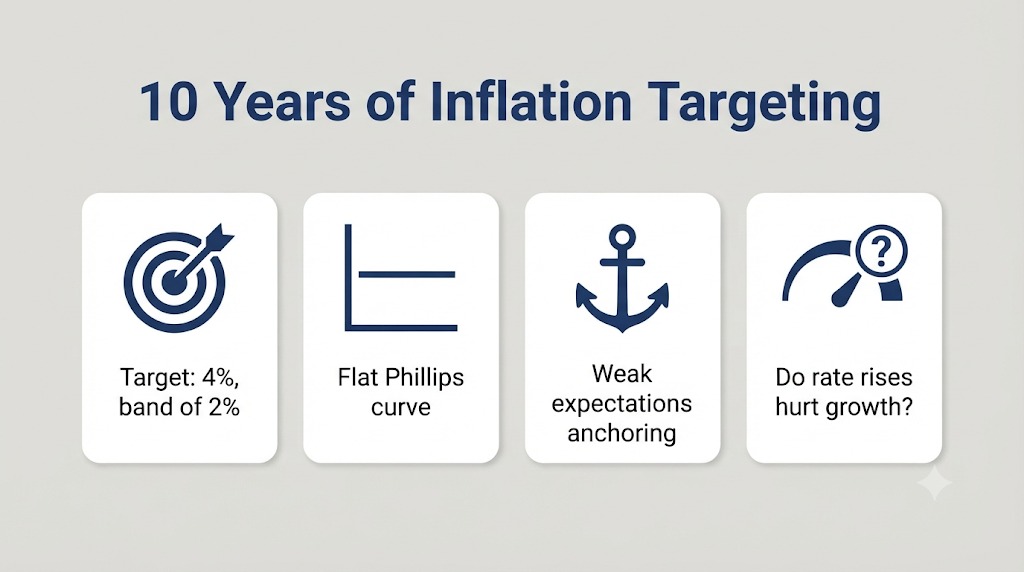
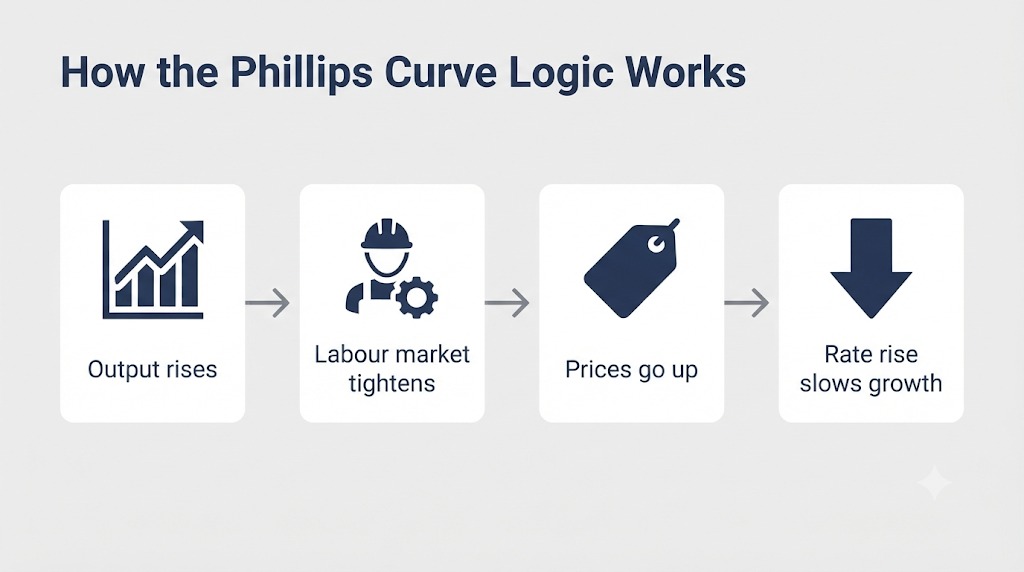
Consider the following statements regarding the Flexible Inflation Targeting (FIT) framework in India: The medium-term inflation target is statutorily set at 4% with a plus-or-minus 2% tolerance band. The New Keynesian Phillips Curve implies that rising economic output uniformly drives up inflation across all economic structures. Which of the statements given above is/are correct?
- 1 only
- 2 only
- Both 1 and 2
- Neither 1 nor 2
Practice questions are answered inside your account. Create a free account, or see what practice includes.
In the context of macroeconomic indicators in India, what approximate percentage does the food and beverages category constitute within the consumer price basket?
- 32.45%
- 45.86%
- 58.12%
- 68.30%
Practice questions are answered inside your account. Create a free account, or see what practice includes.
Consider the following arguments in support of Flexible Inflation Targeting (FIT) in India: It helps anchor sovereign bond yields by lowering headline inflation averages compared to pre-2016 periods. It completely neutralizes the impact of global crude oil spikes and agricultural crop failures on domestic price levels. Which of the statements given above is/are correct?
- 1 only
- 2 only
- Both 1 and 2
- Neither 1 nor 2
Practice questions are answered inside your account. Create a free account, or see what practice includes.
According to survey data from the Reserve Bank of India's Inflation Expectations Survey of Households (IESH), household inflation expectations typically diverge from central bank forecasts by approximately how much?
- 100 basis points
- 200 basis points
- 300 basis points
- 400 basis points
Practice questions are answered inside your account. Create a free account, or see what practice includes.