The Privilege Notice↗
19 May 2026
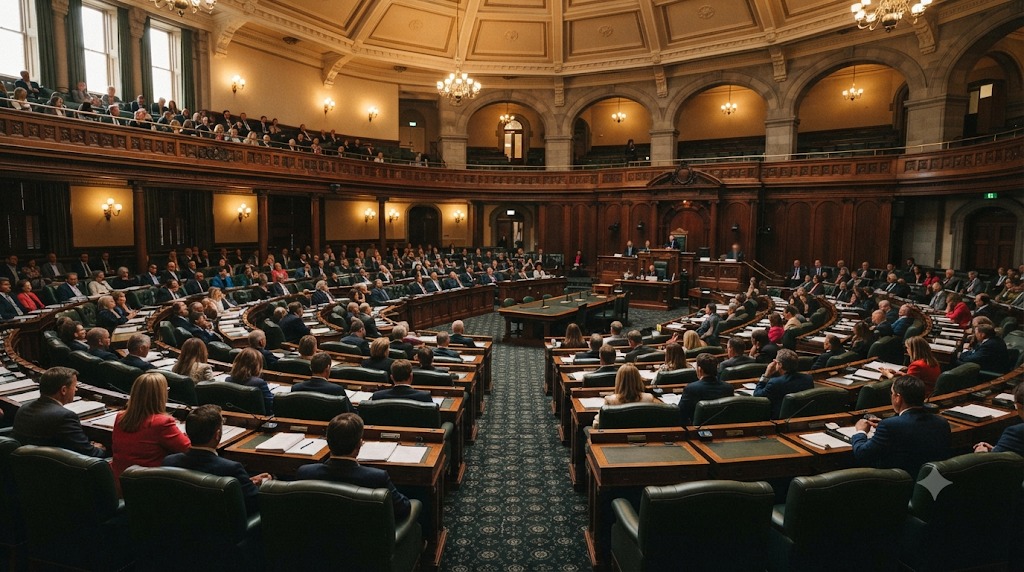
Consider the following statements regarding the Parliamentary Privileges in India: The constitutional foundation for parliamentary privileges is explicitly derived from Article 105 for Parliament and Article 194 for State Legislatures. India has codified all parliamentary privileges into a comprehensive single legislative enactment to eliminate ambiguity. The Privileges Committee of the Rajya Sabha comprises 15 members, whereas the Lok Sabha committee consists of 10 members. Which of the statements given above is/are correct?
- 1 only
- 1 and 2 only
- 2 and 3 only
- 1, 2 and 3
Practice questions are answered inside your account. Create a free account, or see what practice includes.
Under which specific rule of the Rajya Sabha must an MP submit a written notice to the Chairman to initiate a formal privilege motion?
- Rule 151
- Rule 187
- Rule 222
- Rule 268
Practice questions are answered inside your account. Create a free account, or see what practice includes.
Which of the following correctly describes an individual parliamentary privilege available to lawmakers in India?
- The authority to bar outsiders from the House proceedings
- The right to regulate the internal procedure of the House
- Exemption from civil arrest during a specified period before and after a legislative session
- The power to penalize non-members for contempt of the House
Practice questions are answered inside your account. Create a free account, or see what practice includes.
In the absence of a comprehensive legislative enactment for parliamentary privileges in India, what does Parliament primarily depend upon to determine breaches?
- International parliamentary conventions
- British House of Commons traditions, customs, and judicial precedents
- Direct guidelines issued by the International Court of Justice
- State-level legislative precedents exclusively
Practice questions are answered inside your account. Create a free account, or see what practice includes.