Trans-Neptunian Object: 2002 XV93↗
6 May 2026
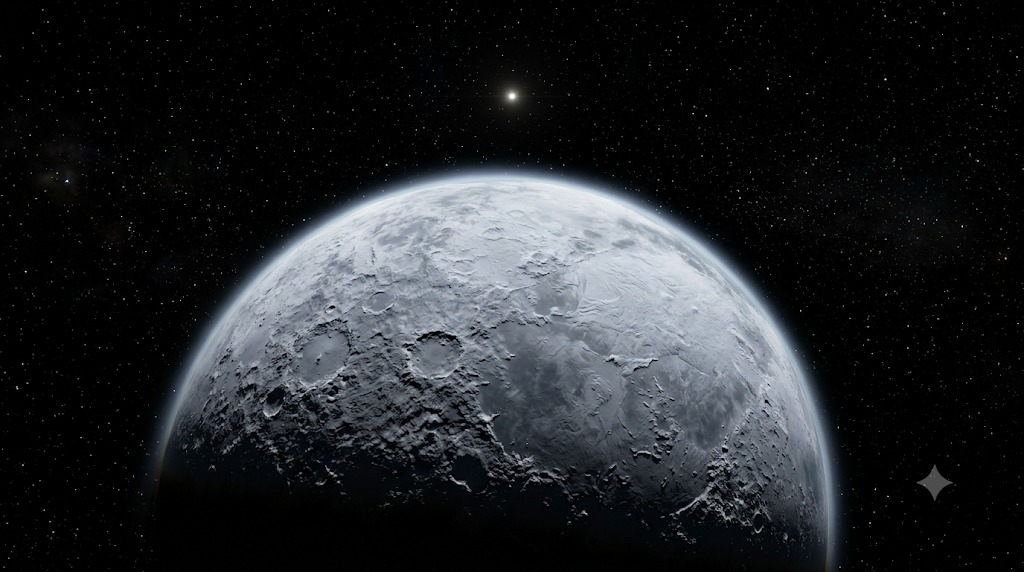
Consider the following statements regarding the trans-Neptunian object (612533) 2002 XV93: It resides within the Kuiper Belt past Neptune's orbit. It is the first trans-Neptunian object besides Pluto recognized to possess an atmosphere. Its atmospheric envelope was detected using stellar occultation by ground-based telescopes. Which of the statements given above are correct?
- 1 and 2 only
- 1 and 3 only
- 2 and 3 only
- 1, 2 and 3
Practice questions are answered inside your account. Create a free account, or see what practice includes.
Which of the following techniques was primarily employed by land-based telescopes in Japan to detect the atmospheric envelope of the trans-Neptunian object 2002 XV93?
- Direct optical imaging using space-borne coronagraphs
- Stellar occultation as it moved across a distant background star
- Doppler shift measurements of reflected solar radiation
- Radar altimetry mapping from orbit
Practice questions are answered inside your account. Create a free account, or see what practice includes.
Which of the following best describes the estimated density and primary constituents of the atmosphere of the trans-Neptunian object 2002 XV93?
- Denser than Earth's atmosphere, primarily composed of oxygen and argon
- Comparable to Mars's atmosphere, primarily composed of heavy carbon dioxide
- 5 to 10 million times less dense than Earth's atmosphere, consisting primarily of nitrogen, methane, or carbon monoxide
- Extremely dense and thick, consisting entirely of hydrogen and helium
Practice questions are answered inside your account. Create a free account, or see what practice includes.