Tar Balls
6 Apr 2026
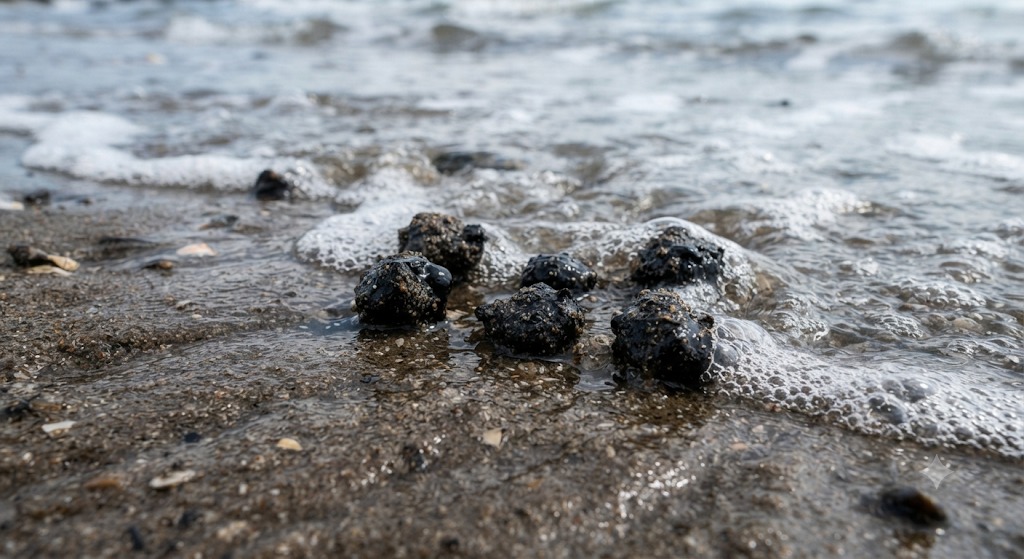
Consider the following statements regarding Tar Balls: They are primarily formed by the evaporation and dissolution of heavy oil fractions followed by emulsification. In India, they are observed most prominently along the western coast during the period from April through September. Which of the statements given above is/are correct?
- 1 only
- 2 only
- Both 1 and 2
- Neither 1 nor 2
Practice questions are answered inside your account. Create a free account, or see what practice includes.
Which ministry has published the draft Tar Balls Management Rules, 2026 to safeguard India's coastal regions from oil spills?
- Ministry of Earth Sciences
- Ministry of Environment, Forest, and Climate Change
- Ministry of Ports, Shipping and Waterways
- Ministry of New and Renewable Energy
Practice questions are answered inside your account. Create a free account, or see what practice includes.
Consider the chemical composition of tar balls: Asphaltenes provide them with their adhesive texture and characteristic black hue. They exclusively contain pure hydrocarbons without any trace metals or impurities. Which of the statements given above is/are correct?
- 1 only
- 2 only
- Both 1 and 2
- Neither 1 nor 2
Practice questions are answered inside your account. Create a free account, or see what practice includes.
What is the primary role of weathering processes in the formation of tar balls?
- Immediate sinking of crude oil to the deep ocean floor before any chemical changes occur
- Conversion of light crude oil fractions into highly toxic gaseous pollutants exclusively
- Transformation of spilled oil through evaporation, dissolution, emulsification, and solidification into sticky lumps
- Neutralization of crude oil toxicity through rapid microbial biodegradation in coastal waters
Practice questions are answered inside your account. Create a free account, or see what practice includes.
Which of the following best describes the ecological and environmental implications of tar balls on coastal ecosystems?
- They act as a beneficial nutrient source that enhances the growth of coral reefs and seagrass beds.
- They can suffocate seagrass beds and coral reefs while causing internal poisoning in marine fauna that ingest them.
- They dissolve harmlessly into seawater within a few hours without affecting marine life or tourism.
- They exclusively impact pelagic birds by improving their plumage insulation against cold sea water.
Practice questions are answered inside your account. Create a free account, or see what practice includes.