Humpback Whale
31 Mar 2026
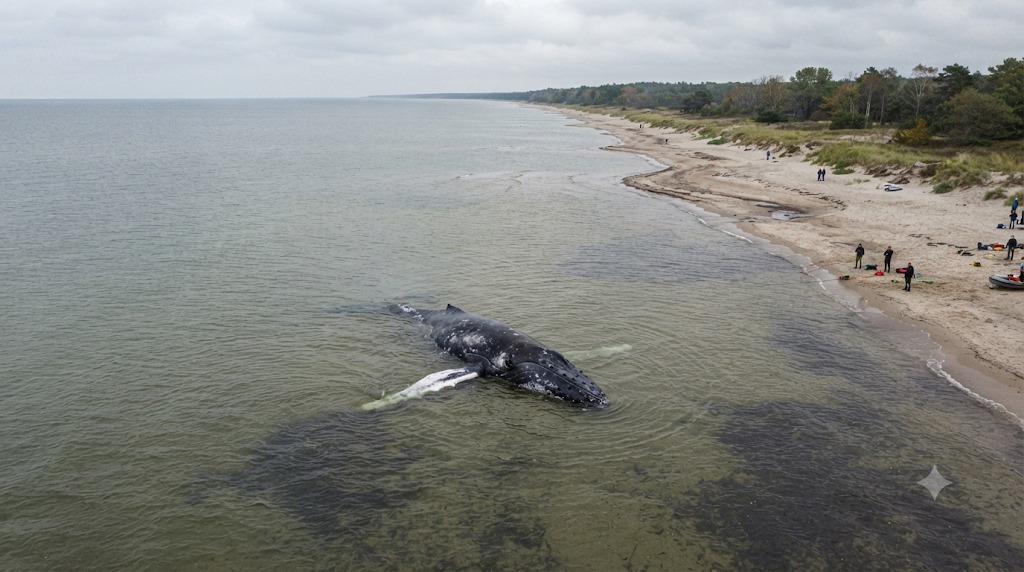
Consider the following statements regarding the humpback whale (Megaptera novaeangliae): They belong to the rorqual family along with blue whales and fin whales. They naturally inhabit the Baltic Sea year-round due to its high salinity and abundant specific prey. The underside of their tail flukes features a unique pigment pattern used for individual identification. Which of the statements given above is/are correct?
- 1 only
- 1 and 3 only
- 2 and 3 only
- 1, 2 and 3
Practice questions are answered inside your account. Create a free account, or see what practice includes.
Which of the following best describes the feeding method utilized by humpback whales?
- Active pursuit of large marine mammals using conical teeth
- Filter feeding using baleen plates, frequently employing a bubble-net technique
- Suction feeding on benthic invertebrates along deep-sea trenches
- Scavenging on the ocean floor using sensitive vibrissae
Practice questions are answered inside your account. Create a free account, or see what practice includes.
Consider the following statements regarding the physical characteristics of humpback whales: They possess long pectoral fins that can reach up to one-third of their total body length. Their head is covered in tubercles, which are specialized hair follicles. Which of the statements given above is/are correct?
- 1 only
- 2 only
- Both 1 and 2
- Neither 1 nor 2
Practice questions are answered inside your account. Create a free account, or see what practice includes.
Regarding the migration patterns of humpback whales, which of the following statements is accurate?
- They remain exclusively in tropical waters throughout the entire year without migrating.
- They undertake one of the longest migrations of any mammal between cold high-latitude feeding grounds and warm tropical breeding grounds.
- Their migration is strictly limited to enclosed seas and inland salt lakes.
- They migrate exclusively between the Arctic and Antarctic ice shelves, completely avoiding temperate zones.
Practice questions are answered inside your account. Create a free account, or see what practice includes.