Kutki - Picrorhiza kurroa
25 Jul 2026
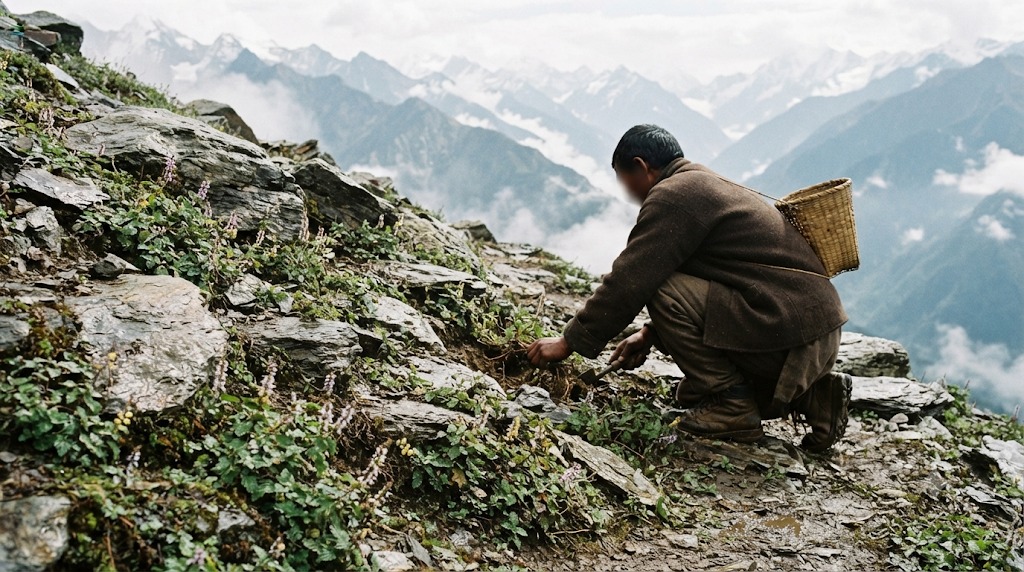
Consider the following statements regarding the medicinal herb Picrorhiza kurroa, commonly known as Kutki: It is a creeping perennial herb indigenous to alpine and sub-alpine cold zones of the Himalayas. Its therapeutic properties are concentrated primarily in its fibrous roots rather than its stolons. It is classified as Endangered on the IUCN Red List. Which of the statements given above are correct?
- 1 and 2 only
- 1 and 3 only
- 2 and 3 only
- 1, 2 and 3
Practice questions are answered inside your account. Create a free account, or see what practice includes.
With reference to the active phytochemical constituents and applications of Kutki (Picrorhiza kurroa), consider the following statements: It contains significant amounts of iridoid glycosides such as Picroside I and Picroside II. It is traditionally used in Ayurveda as a liver tonic and is a key ingredient in formulations like Arogyavardhani Vati. Which of the statements given above is/are correct?
- Only 1
- Only 2
- Both 1 and 2
- Neither 1 nor 2
Practice questions are answered inside your account. Create a free account, or see what practice includes.
Under which international wildlife and conservation framework is Picrorhiza kurroa (Kutki) listed, restricting its global commerce to strictly regulated permits?
- CITES Appendix I
- CITES Appendix II
- CMS Appendix I
- Wildlife Protection Act, 1972 (Schedule I)
Practice questions are answered inside your account. Create a free account, or see what practice includes.
What is the typical altitudinal range of the native Himalayan habitat where Picrorhiza kurroa naturally occurs?
- 500 to 1,500 meters above sea level
- 1,000 to 2,000 meters above sea level
- 2,700 to 4,500 meters above sea level
- 5,000 to 6,500 meters above sea level
Practice questions are answered inside your account. Create a free account, or see what practice includes.