The Draft CAFE-III Norms
18 Jul 2026
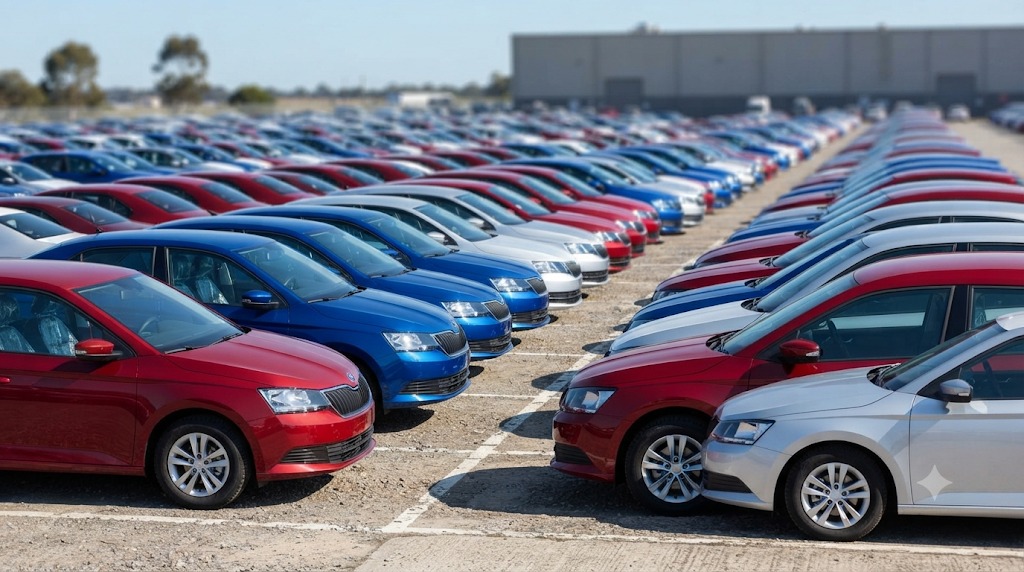
Consider the following statements regarding the Corporate Average Fuel Economy (CAFE) standards in India: CAFE standards mandate automobile manufacturers to achieve a specified average benchmark for fuel economy and carbon dioxide emissions across their total yearly vehicle sales. The rules are enforced under the statutory framework of the Environment (Protection) Act, 1986. Phase III of the CAFE norms proposes a transition from the Modified Indian Driving Cycle (MIDC) to the Worldwide Harmonised Light Vehicles Test Procedure (WLTP). Which of the statements given above are correct?
- 1 and 2 only
- 1 and 3 only
- 2 and 3 only
- 1, 2 and 3
Practice questions are answered inside your account. Create a free account, or see what practice includes.
Which of the following organizations have formally published the Draft Corporate Average Fuel Economy-III (CAFE-III) norms?
- Society of Indian Automobile Manufacturers (SIAM) and Ministry of Heavy Industries
- Bureau of Energy Efficiency (BEE) and Ministry of Power
- Central Pollution Control Board (CPCB) and Ministry of Environment, Forest and Climate Change
- Bureau of Indian Standards (BIS) and Ministry of Road Transport and Highways
Practice questions are answered inside your account. Create a free account, or see what practice includes.
Under the proposed Draft CAFE-III regulations, what is the targeted fleet-wide emission average by the period FY2031-32?
- 3.996 liters/100 km (94.76 gCO₂/km)
- 3.650 liters/100 km (86.50 gCO₂/km)
- 3.327 liters/100 km (78.90 gCO₂/km)
- 2.850 liters/100 km (67.40 gCO₂/km)
Practice questions are answered inside your account. Create a free account, or see what practice includes.
Consider the following statements regarding the compliance periods and incentives under the Draft CAFE-III norms: Compliance evaluations will be conducted across two extended blocks consisting of a three-year window followed by a two-year window. Battery Electric Vehicles (BEVs) are assigned a 3.0x super-credit multiplier. E20 fuel receives a carbon neutrality factor reduction advantage of 22.3%. Which of the statements given above are correct?
- 1 and 2 only
- 2 and 3 only
- 1 and 3 only
- 1, 2 and 3
Practice questions are answered inside your account. Create a free account, or see what practice includes.
With reference to the technology derogation credits under the Draft CAFE-III norms, what is the maximum regulatory relief in gCO₂/km that carmakers can secure by incorporating certified fuel-efficient technologies?
- Up to 5 gCO₂/km
- Up to 9 gCO₂/km
- Up to 12 gCO₂/km
- Up to 15 gCO₂/km
Practice questions are answered inside your account. Create a free account, or see what practice includes.