Makhana
20 Aug 2026
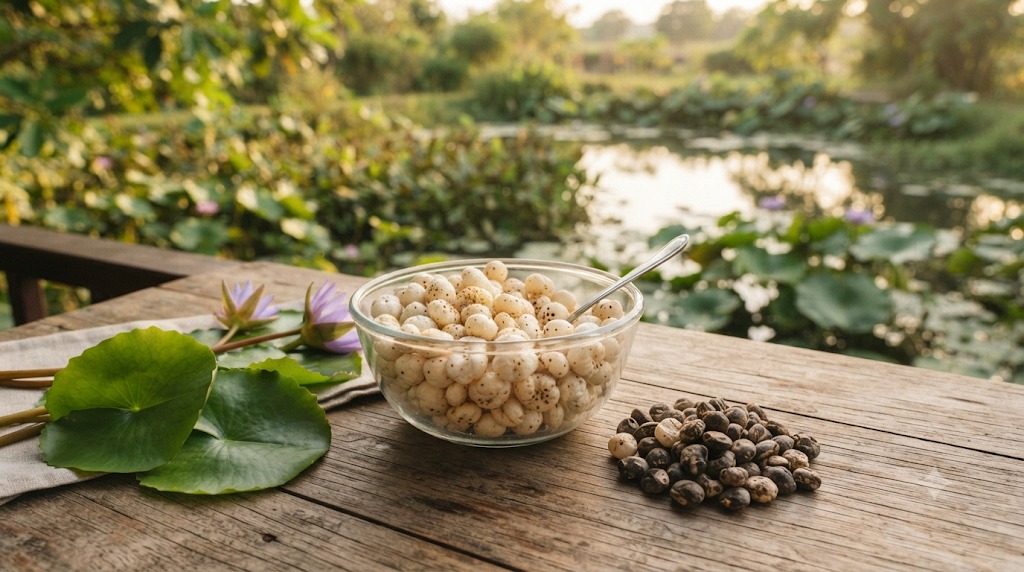
Consider the following statements regarding Makhana (Euryale ferox): It belongs to the water lily family (Nymphaeaceae) and is primarily cultivated in fast-flowing river currents. Mithila Makhana was granted the Geographical Indication (GI) status in 2022. Which of the statements given above is/are correct?
- 1 only
- 2 only
- Both 1 and 2
- Neither 1 nor 2
Practice questions are answered inside your account. Create a free account, or see what practice includes.
With reference to the botanical and nutritional characteristics of Euryale ferox, consider the following statements: The edible part of the plant consists of starchy seeds that undergo roasting and popping. The crop possesses a high Glycemic Index (GI), making it unsuitable for individuals managing Type-2 diabetes. Which of the statements given above is/are correct?
- 1 only
- 2 only
- Both 1 and 2
- Neither 1 nor 2
Practice questions are answered inside your account. Create a free account, or see what practice includes.
Which of the following Indian states accounts for nearly 90% of the total domestic makhana production, centered largely around the Mithilanchal and Kosi-Seemanchal regions?
- West Bengal
- Assam
- Bihar
- Odisha
Practice questions are answered inside your account. Create a free account, or see what practice includes.
Consider the following statements regarding the advanced cultivars and economic projections of makhana in India: Cultivars such as Swarna Vaidehi and Sabour Makhana-1 have helped elevate seed yields significantly. India currently accounts for less than 50% of the worldwide makhana production. Which of the statements given above is/are correct?
- 1 only
- 2 only
- Both 1 and 2
- Neither 1 nor 2
Practice questions are answered inside your account. Create a free account, or see what practice includes.
What is the primary scientific classification and family of the plant commonly known as makhana or fox nut?
- Nelumbo nucifera (Nelumbonaceae)
- Euryale ferox (Nymphaeaceae)
- Trapa natans (Lythraceae)
- Typha domingensis (Typhaceae)
Practice questions are answered inside your account. Create a free account, or see what practice includes.