Jhumka
11 Mar 2026
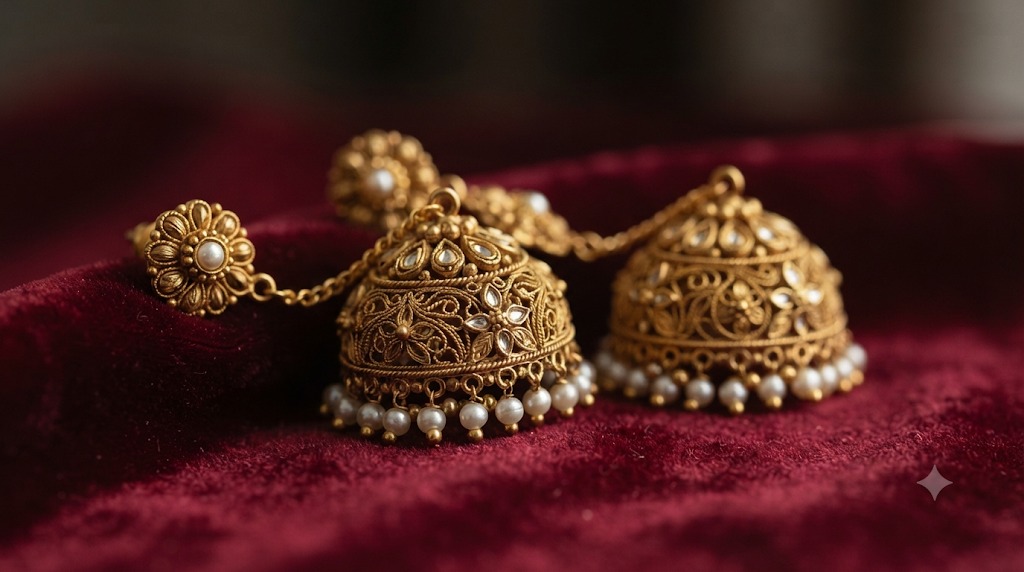
Consider the following statements regarding the traditional jhumka earrings of India: The historical origins of the jhumka design can be traced back to approximately 300 BCE. The design gained significant prominence and refinement under the Chola empire. They are exclusively fabricated using pure gold and silver without any other metallic alloys. Which of the statements given above are correct?
- 1 and 2 only
- 2 and 3 only
- 1 and 3 only
- 1, 2 and 3
Practice questions are answered inside your account. Create a free account, or see what practice includes.
Why do traditional heritage crafts like chikankari, bandhani, and jhumkas generally fail to qualify for patent safeguards under current intellectual property frameworks?
- They are protected exclusively by international copyright laws instead of national patents.
- They feature centuries-old aesthetics and are collective creations lacking a single discernible inventor.
- The Government of India explicitly bans the patenting of all traditional clothing and accessories.
- They are made entirely of biodegradable materials which exempts them from intellectual property laws.
Practice questions are answered inside your account. Create a free account, or see what practice includes.
Consider the following statements regarding the protection of traditional cultural expressions (TCEs) under intellectual property systems: Conventional IP frameworks like patents and trademarks primarily focus on individual works or corporate identity. Many heritage arts exist as oral heritage and cultural customs, lacking the formal written records often demanded for patent submissions. Which of the statements given above is/are correct?
- 1 only
- 2 only
- Both 1 and 2
- Neither 1 nor 2
Practice questions are answered inside your account. Create a free account, or see what practice includes.