Understanding LPG and LNG
25 Mar 2026
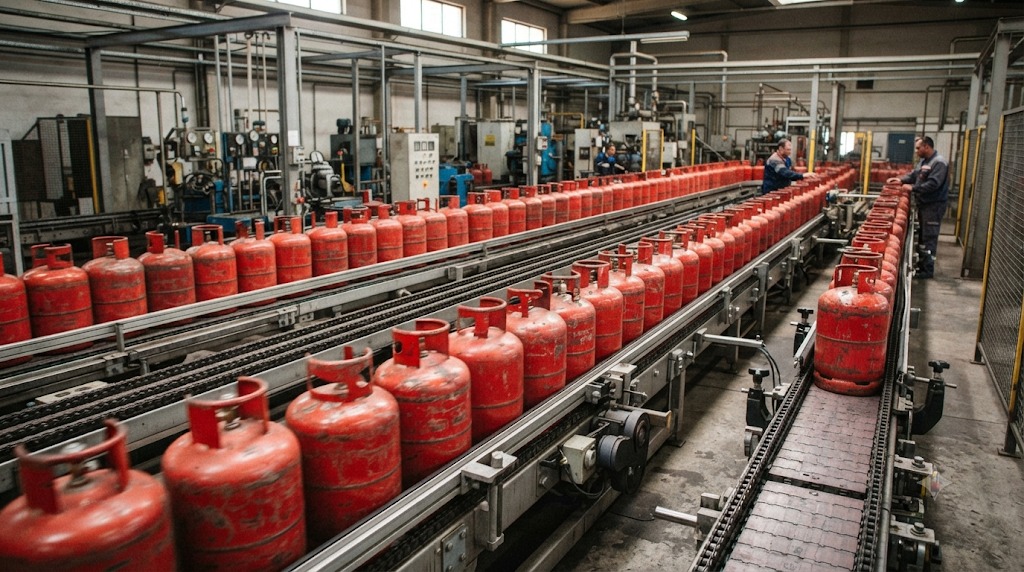
Consider the following statements regarding Liquefied Petroleum Gas (LPG) and Liquefied Natural Gas (LNG): LPG is chiefly composed of propane and butane, whereas LNG consists primarily of methane. LPG is heavier than air and tends to sink, while LNG is lighter than air and disperses quickly upon leaking. LPG is produced through the cryogenic cooling of purified natural gas, whereas LNG stems from crude oil refining and natural gas processing. Which of the statements given above are correct?
- 1 and 2 only
- 2 and 3 only
- 1 and 3 only
- 1, 2 and 3
Practice questions are answered inside your account. Create a free account, or see what practice includes.
Which of the following best describes the primary physical change that occurs during the preparation of Liquefied Natural Gas (LNG) for transport?
- Cooling below -160°C to reduce gaseous volume by approximately 600 times
- Applying moderate pressure at room temperature to liquefy propane and butane gases
- Compressing methane to a high-pressure state without changing its temperature
- Stripping heavier hydrocarbons from crude oil fractions at elevated temperatures
Practice questions are answered inside your account. Create a free account, or see what practice includes.
With reference to the safety and storage characteristics of LPG and LNG, consider the following statements: LPG requires pressurized storage cylinders at room temperature. LNG is stored in specialized cryogenic tanks to maintain its extremely low temperature. LPG leaks are considered safer than LNG leaks because LPG evaporates rapidly into the atmosphere. Which of the statements given above are correct?
- 1 and 2 only
- 2 and 3 only
- 1 and 3 only
- 1, 2 and 3
Practice questions are answered inside your account. Create a free account, or see what practice includes.
Which of the following applications are correctly associated with LNG rather than LPG?
- Household cooking fuel via portable cylinders and vehicle autogas
- Water heating and space heating in areas lacking gas grids
- Bunker fuel for ships, long-distance trucks, and regasification for power generation
- High-heat industrial operations such as metal cutting and welding
Practice questions are answered inside your account. Create a free account, or see what practice includes.