Blue Micromoon
1 Jun 2026
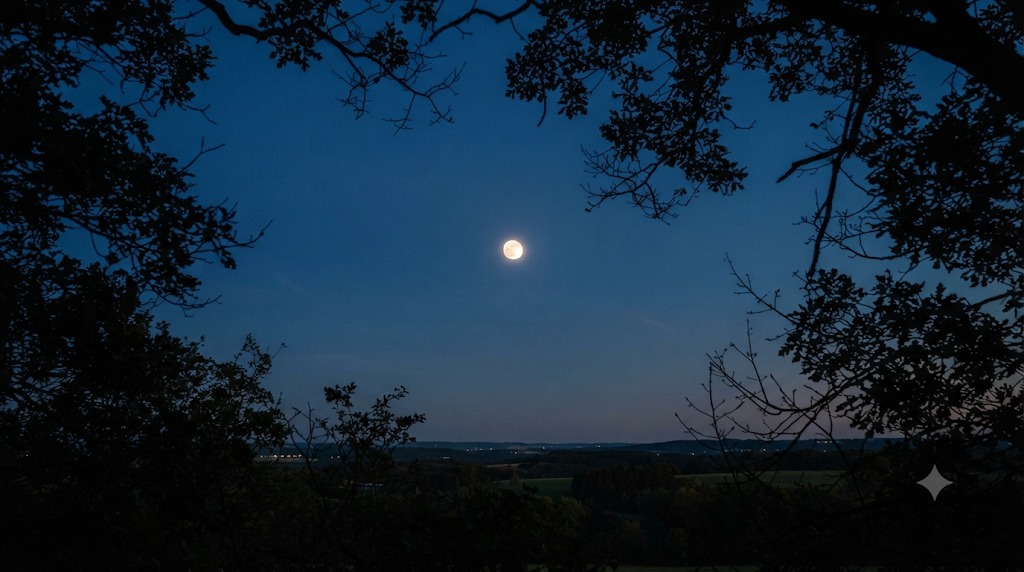
Consider the following statements regarding the 'Blue Micromoon': It occurs when a Blue Moon coincides with the moon being at perigee, its closest point to Earth. The term 'Blue' in Blue Micromoon implies that the lunar surface physically acquires a bluish tint due to unique celestial radiation. Which of the statements given above is/are correct?
- 1 only
- 2 only
- Both 1 and 2
- Neither 1 nor 2
Practice questions are answered inside your account. Create a free account, or see what practice includes.
With reference to orbital mechanics and lunar events, what defines a 'Micromoon'?
- A full moon occurring when the moon is at its perigee
- A full moon happening right at apogee, the point in the moon's orbit farthest from the Earth
- A new moon aligning directly between the Earth and the Sun during an equinox
- A lunar eclipse where Earth's umbra covers exactly half of the lunar disc
Practice questions are answered inside your account. Create a free account, or see what practice includes.
Consider the following statements about a standard Blue Moon: It is defined as the second full moon occurring inside a single calendar month. It requires the moon to be strictly at apogee during the occurrence. Which of the statements given above is/are correct?
- 1 only
- 2 only
- Both 1 and 2
- Neither 1 nor 2
Practice questions are answered inside your account. Create a free account, or see what practice includes.
How does the visual appearance of a Blue Micromoon generally compare to that of a Supermoon?
- It appears 14% larger and 30% brighter than a Supermoon.
- It appears identical in size and luminosity to a standard full moon.
- It appears roughly 14% smaller and 30% dimmer than a Supermoon.
- It appears twice as bright due to the combination of calendar anomalies.
Practice questions are answered inside your account. Create a free account, or see what practice includes.
What is the primary reason why a calendar month can occasionally accommodate two full moons?
- The tilt of Earth's axis alters the timing of lunar phases every 2 to 3 years.
- A complete lunar cycle spans 29.5 days, whereas regular calendar months contain 30 or 31 days.
- The gravitational pull of outer planets temporarily accelerates the moon's orbital speed.
- Apogee occurs more frequently during months with 31 days.
Practice questions are answered inside your account. Create a free account, or see what practice includes.