Viability Gap Funding Scheme for development of 92 GWh Grid-Scale Energy Storage Systems
6 Nov 2026
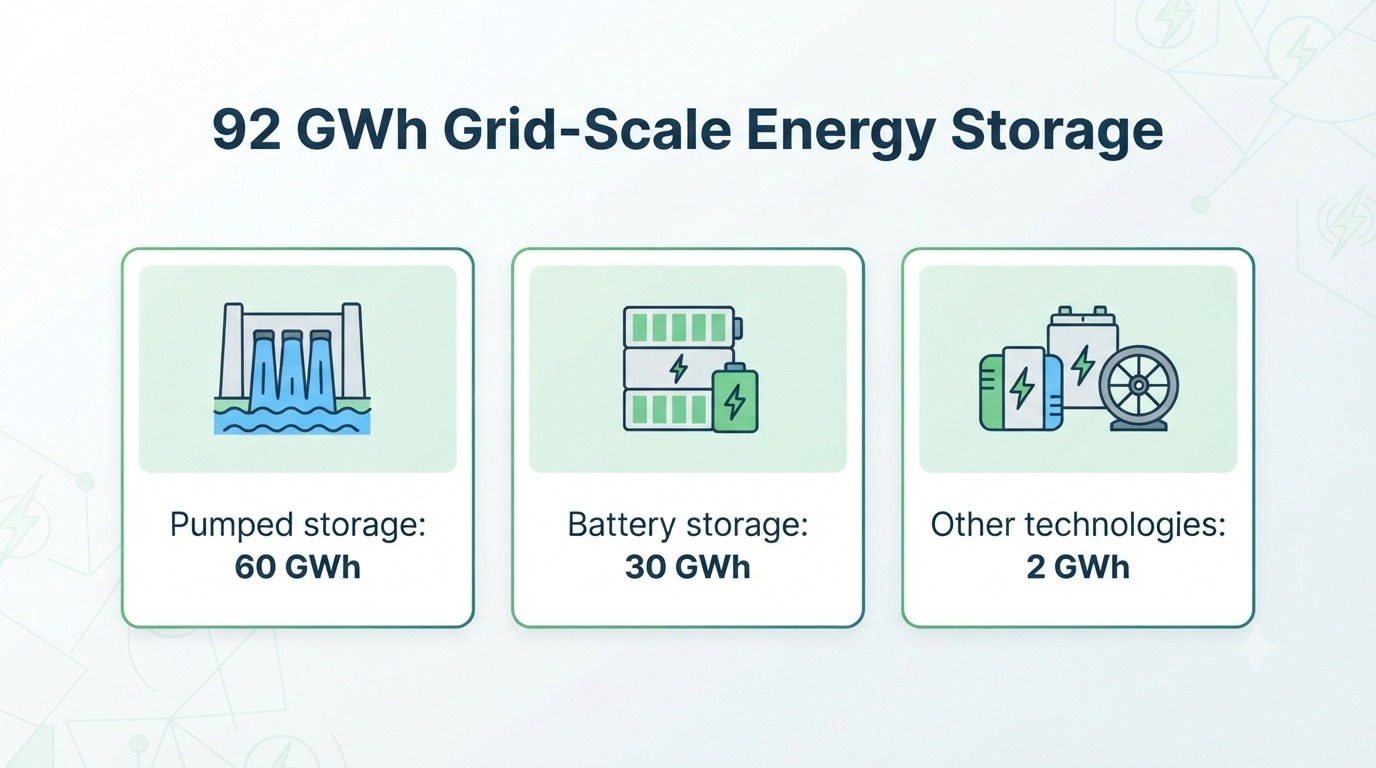
Consider the following statements regarding the Viability Gap Funding (VGF) Scheme for Grid-Scale Energy Storage Systems: The scheme is approved for a total financial outlay of ₹14,500 crore to be utilized from FY 2026-27 to FY 2030-31. It aims to support the development of a total energy storage capacity of 92 GWh, of which the majority share is allocated to Battery Energy Storage Systems (BESS). Which of the statements given above is/are correct?
- 1 only
- 2 only
- Both 1 and 2
- Neither 1 nor 2
Practice questions are answered inside your account. Create a free account, or see what practice includes.
Under the recently cleared Viability Gap Funding (VGF) Scheme for Grid-Scale Energy Storage Systems, what is the mandated Domestic Content Requirement (DCR) for Battery Energy Storage Systems (BESS) projects receiving support?
- 25%
- 40%
- 50%
- 75%
Practice questions are answered inside your account. Create a free account, or see what practice includes.
What is the targeted total national grid-scale energy storage capacity that India aims to achieve by the year 2031-32, towards which the current 92 GWh VGF scheme contributes?
- 250 GWh
- 320 GWh
- 411 GWh
- 500 GWh
Practice questions are answered inside your account. Create a free account, or see what practice includes.
In the context of the VGF Scheme for Grid-Scale Energy Storage Systems, how is the selection of projects and distribution of VGF support determined?
- Direct nomination by the Ministry of Power based on regional electricity deficits
- Competitive bidding on tariffs where preference is given to lowest storage tariffs and least government help
- Equal distribution among all registered public sector DISCOMs across states
- Allocation strictly proportional to the installed renewable energy capacity of private developers
Practice questions are answered inside your account. Create a free account, or see what practice includes.