The Transparency And Credibility In Public Institutions
3 Jun 2026
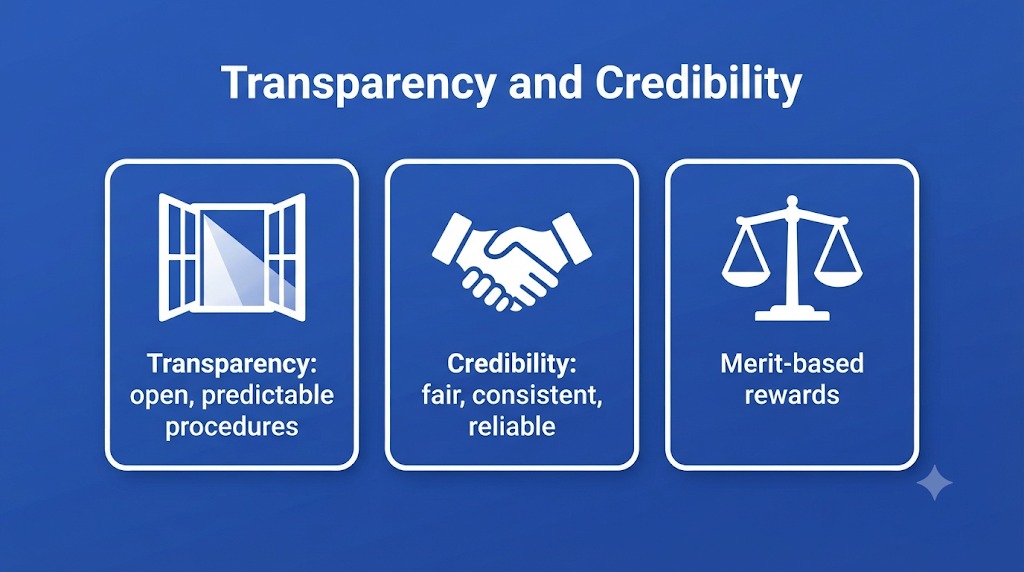
Consider the following statements regarding the core ethical frameworks associated with public governance: Deontological ethics emphasizes that public institutions have a non-negotiable moral responsibility to safeguard individual rights irrespective of administrative cost. Utilitarianism seeks to maximize public well-being by optimizing the greatest happiness for the greatest number. Rawlsian justice requires that institutional rules be crafted behind a veil of ignorance to protect the most vulnerable stakeholders. Which of the statements given above are correct?
- 1 and 2 only
- 2 and 3 only
- 1 and 3 only
- 1, 2 and 3
Practice questions are answered inside your account. Create a free account, or see what practice includes.
In the context of public administration and institutional governance, how is 'credibility' best defined?
- The legal mandate granted exclusively to elected bodies to enact binding administrative statutes.
- The moral capital accumulated by an entity over time based on consistency, fairness, expertise, and reliability.
- The absolute right of an organization to function under secrecy during national emergency rollouts.
- The financial surplus generated by a public institution through commercialized public records.
Practice questions are answered inside your account. Create a free account, or see what practice includes.
Consider the following measures proposed as the 'way forward' for reforming digital evaluation systems: Mandating free and secure online access to scanned answer scripts for all students. Enforcing comprehensive pre-board stress testing and mock simulations on digital servers. Commercializing public records to fund infrastructure upgrades and server maintenance. Which of the statements given above are correct?
- 1 and 2 only
- 2 and 3 only
- 1 and 3 only
- 1, 2 and 3
Practice questions are answered inside your account. Create a free account, or see what practice includes.
According to the principles of distributive justice within educational evaluation frameworks, why is institutional fairness considered an essential prerequisite?
- To ensure that public rewards such as scholarships and university admissions are awarded strictly on merit rather than arbitrary errors.
- To allow evaluation boards to alter scoring criteria dynamically based on administrative convenience.
- To maximize institutional revenue by reducing the cost of manual answer booklet re-evaluations.
- To eliminate the need for any digital or automated tools in public examinations.
Practice questions are answered inside your account. Create a free account, or see what practice includes.