Model Code of Conduct (MCC)↗
5 May 2026
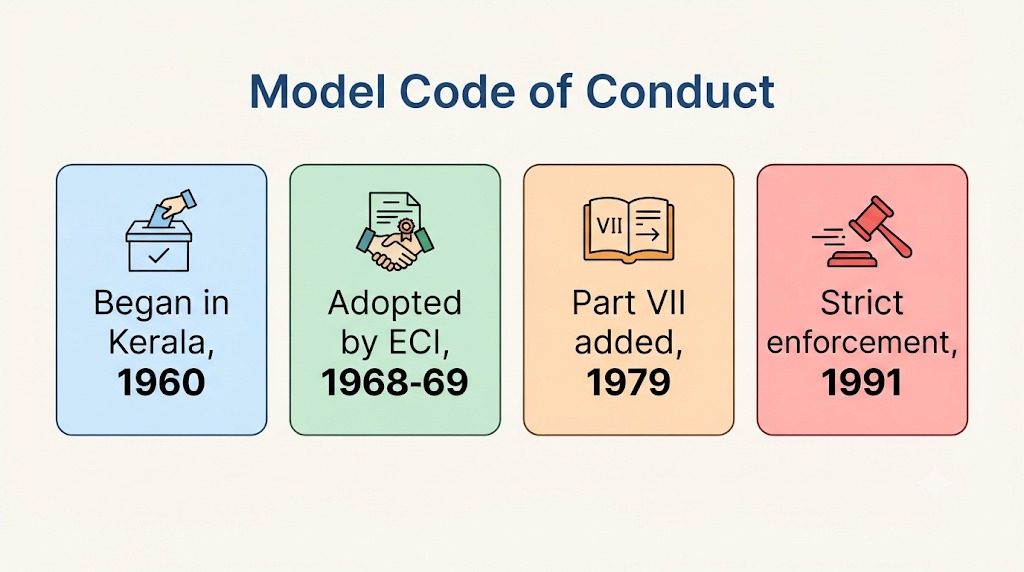
Consider the following statements regarding the Model Code of Conduct (MCC) in India: It is a statutory body created by an act passed by Parliament. Its authority is derived from the constitutional mandate granted to the Election Commission under Article 324. Which of the statements given above is/are correct?
- 1 only
- 2 only
- Both 1 and 2
- Neither 1 nor 2
Practice questions are answered inside your account. Create a free account, or see what practice includes.
In which of the following years was a code of conduct for political parties first introduced during state assembly elections in India?
- 1952
- 1960
- 1968
- 1979
Practice questions are answered inside your account. Create a free account, or see what practice includes.
Part VII of the Model Code of Conduct specifically focuses on which of the following?
- Guidelines for overseas voters and postal ballots
- Regulations concerning campaign financing and expenditure limits
- Restrictions to prevent the incumbent Party in Power from leveraging official status for electoral benefits
- Procedures for conducting exit polls and opinion surveys
Practice questions are answered inside your account. Create a free account, or see what practice includes.
Who among the following Chief Election Commissioners is widely credited with enforcing the Model Code of Conduct with strictness, transforming it into a powerful deterrent?
- Sukumar Sen
- T.N. Seshan
- J.M. Lyngdoh
- Syd Abid Shah
Practice questions are answered inside your account. Create a free account, or see what practice includes.
Which of the following best describes the legal enforceability and enforcement mechanism of the Model Code of Conduct?
- It is enforceable through criminal prosecution and imprisonment under the Representation of the People Act, 1951.
- It is non-statutory in nature and derives its effectiveness primarily through moral authority, public censure, and political consensus.
- It is directly enforceable through mandatory civil injunctions issued by the Supreme Court of India.
- It carries no weight except for voluntary compliance by independent candidates.
Practice questions are answered inside your account. Create a free account, or see what practice includes.