India’s First Indigenous Inactivated H5N1 (Clade 2.3.2.1a) Vaccine
19 Nov 2026
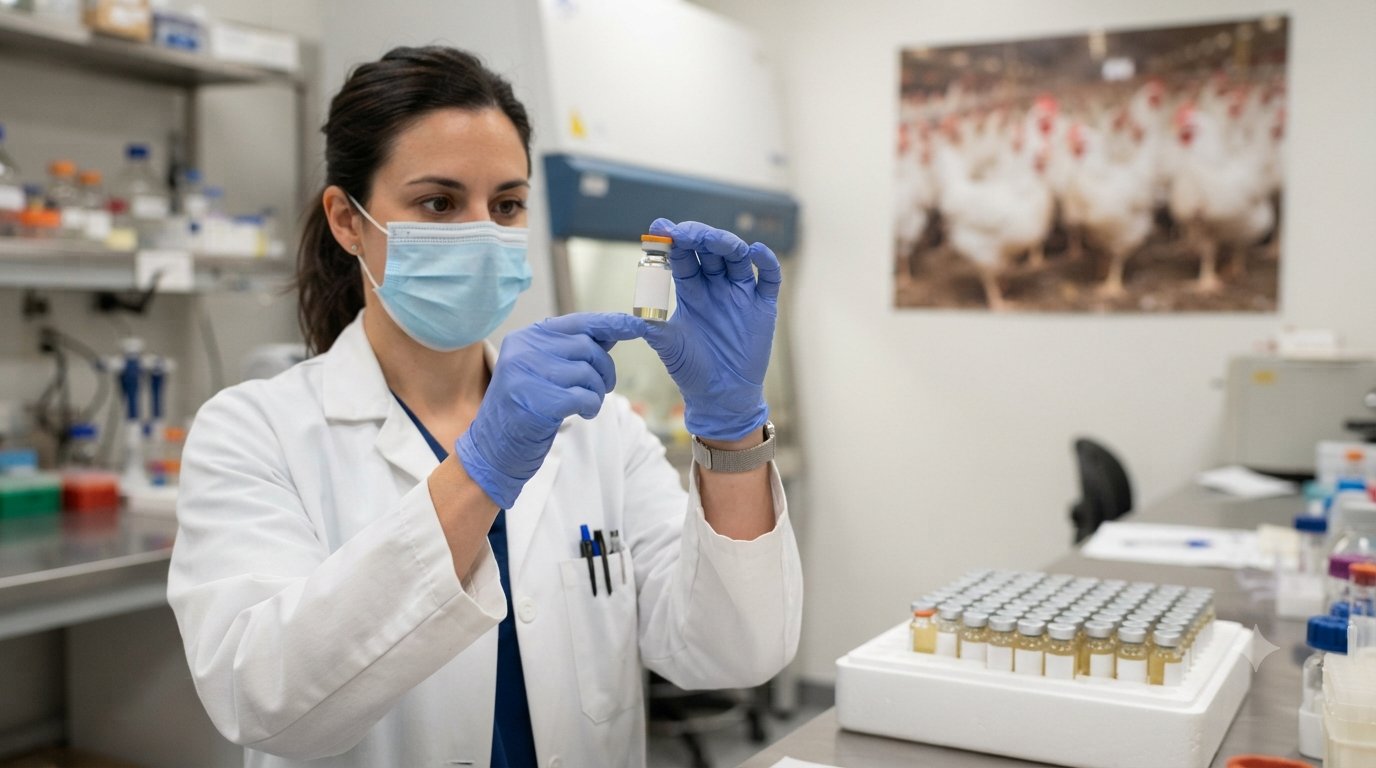
Which of the following best describes the primary technological type of the newly introduced indigenous H5N1 vaccine for poultry?
- A live-attenuated viral vaccine that utilizes weakened live virus strains
- A messenger RNA (mRNA) vaccine encoding viral surface glycoproteins
- An inactivated (killed-virus) vaccine containing chemically treated non-replicating viral particles
- A recombinant vector vaccine expressing avian influenza antigens
Practice questions are answered inside your account. Create a free account, or see what practice includes.
Which of the following institutions developed India's first indigenous inactivated H5N1 (Clade 2.3.2.1a) vaccine for chickens?
- Indian Council of Medical Research (ICMR)
- ICAR–National Institute of High Security Animal Diseases (ICAR-NIHSAD)
- Indian Veterinary Research Institute (IVRI)
- National Institute of Virology (NIV)
Practice questions are answered inside your account. Create a free account, or see what practice includes.
Consider the following statements regarding India's first indigenous H5N1 vaccine for chickens: It is a live-attenuated vaccine designed to replicate in the host to build lifelong immunity. It has been developed by the ICAR–National Institute of High Security Animal Diseases (ICAR-NIHSAD). It specifically targets the Clade 2.3.2.1a genetic lineage of the H5N1 virus. Which of the statements given above are correct?
- 1 and 2 only
- 2 and 3 only
- 1 and 3 only
- 1, 2 and 3
Practice questions are answered inside your account. Create a free account, or see what practice includes.