The Great Indian Bustard
16 Jun 2026
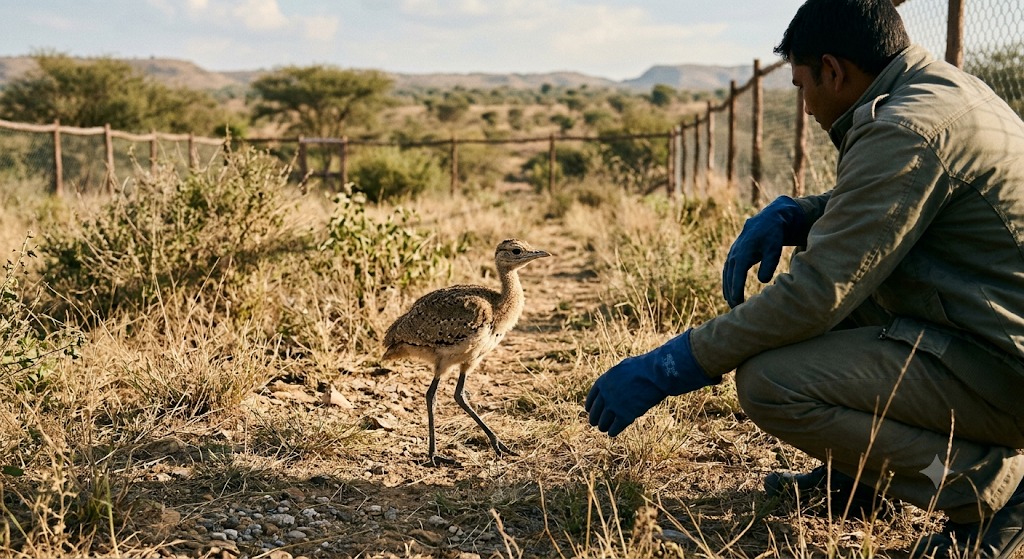
Consider the following statements regarding the Great Indian Bustard: It is endemic to the Indian subcontinent and is one of the heaviest flying birds in the world. In India, it is protected under Schedule I of the Wildlife Protection Act, 1972. The species has a high reproductive rate, with females laying multiple clutches of eggs annually in elevated tree nests. Which of the statements given above is/are correct?
- 1 only
- 1 and 2 only
- 2 and 3 only
- 1, 2 and 3
Practice questions are answered inside your account. Create a free account, or see what practice includes.
The vast majority of the remaining wild population of the Great Indian Bustard is principally confined to which of the following protected areas?
- Velavadar National Park
- Desert National Park
- Eturnagaram Wildlife Sanctuary
- Rann of Kutch Wildlife Sanctuary
Practice questions are answered inside your account. Create a free account, or see what practice includes.
With reference to the conservation status of the Great Indian Bustard, what is its current categorization under the IUCN Red List and CITES appendices?
- Endangered (IUCN) and Appendix II (CITES)
- Critically Endangered (IUCN) and Appendix I (CITES)
- Vulnerable (IUCN) and Appendix I (CITES)
- Critically Endangered (IUCN) and Appendix II (CITES)
Practice questions are answered inside your account. Create a free account, or see what practice includes.
Which of the following is currently identified as the primary cause of mortality for adult Great Indian Bustards in their natural grassland habitats?
- Predation of ground-laid eggs by feral dogs and foxes
- Habitat loss due to intensive agricultural monocultures
- Collisions with high-voltage power transmission cables
- Poaching for illegal international pet trade
Practice questions are answered inside your account. Create a free account, or see what practice includes.
Which of the following best describes the dietary habits and trophic role of the Great Indian Bustard?
- Strictly herbivorous grazer feeding exclusively on grass species and aquatic plants
- Obligate carnivore feeding primarily on small mammals and reptiles
- Opportunistic omnivore consuming insects, rodents, lizards, seeds, and crops
- Frugivore specializing in forest canopy fruits and berries
Practice questions are answered inside your account. Create a free account, or see what practice includes.