The Later Vedic Period
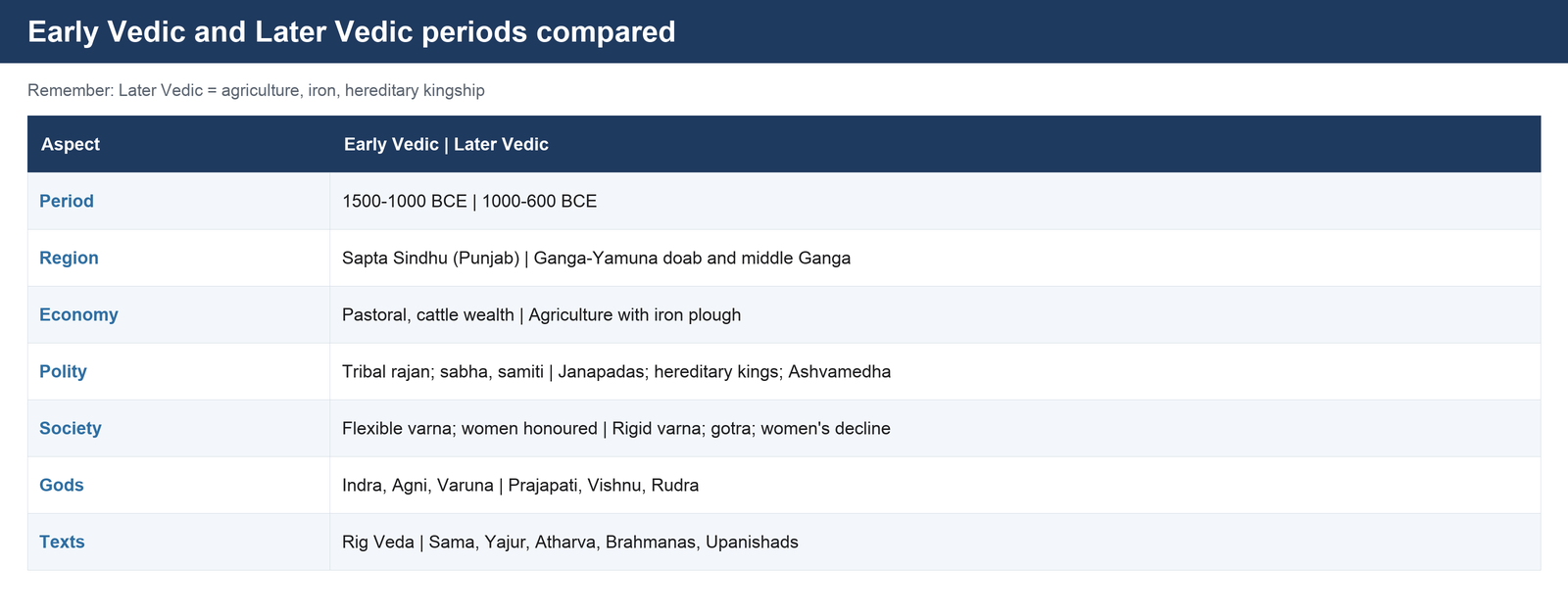
| Feature | Early Vedic | Later Vedic |
|---|---|---|
| Date | 1500-1000 BCE | 1000-600 BCE |
| Region | Punjab (Sapta Sindhu) | Ganga-Yamuna doab and middle Ganga |
| Economy | Pastoral | Agriculture; iron plough |
| Polity | Tribe; rajan; sabha and samiti strong | Janapadas; hereditary king; assemblies weak |
| Varna | Flexible | Hereditary and rigid |
| Women | High status | Declined |
| Gods | Indra, Agni, Varuna | Prajapati, Vishnu, Rudra |
| Religion | Prayer and simple sacrifice | Elaborate rituals; Upanishadic thought |
Which of the following is correct about the Later Vedic period?
- Coins were widely used
- Agriculture became the main occupation
- Women played a leading political role
- The sabha and samiti became more powerful
Practice questions are answered inside your account. Create a free account, or see what practice includes.
The Ashvamedha sacrifice was performed by a king to
- Obtain rain
- Assert supreme authority over his neighbours
- Honour his ancestors
- End a drought
Practice questions are answered inside your account. Create a free account, or see what practice includes.
Painted Grey Ware is associated with
- Harappan culture
- Later Vedic culture
- Mauryan culture
- Gupta culture
Practice questions are answered inside your account. Create a free account, or see what practice includes.
Which Veda is a collection of melodies?
- Rig Veda
- Sama Veda
- Yajur Veda
- Atharva Veda
Practice questions are answered inside your account. Create a free account, or see what practice includes.
Who among the following was a learned woman of the Upanishadic age?
- Gargi
- Apala
- Lopamudra
- Ghosha
Practice questions are answered inside your account. Create a free account, or see what practice includes.